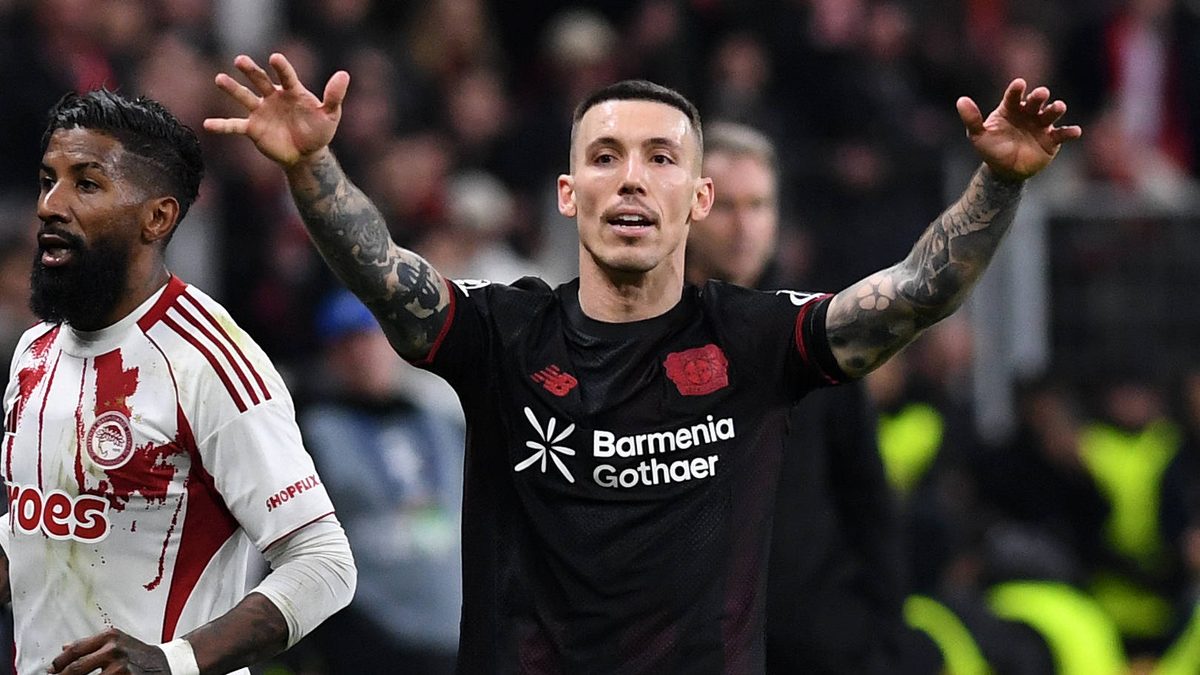
Leverkusen 0-0 Olympiakos: A Tense UCL Stalemate at BayArena
The electric atmosphere of the UEFA Champions League knockout phase once again graced the BayArena on February 24, 2026, as Bayer 04 Leverkusen hosted Olympiacos FC. In a highly anticipated first-leg clash that promised fireworks, fans were ultimately treated to a tense, tactical battle culminating in a goalless 0-0 draw. While the scoreline might suggest a lack of excitement, this pivotal encounter left both sides with plenty to ponder and set the stage for a dramatic return leg.
For those eagerly following the Leverkusen vs Olympiakos Live: UCL Kick-off, Stream & TV Guide buzz, this match provided a stark reminder of the fine margins in elite European football. High stakes meant cautious approaches, and the tactical chess match often overshadowed moments of individual brilliance. Let's delve into the specifics of this intriguing encounter.
Match Report: Defensive Solidity Trumps Attacking Flurry
From the opening whistle at 20:00 UTC, it was clear that Olympiacos arrived in Leverkusen with a disciplined game plan: frustrate the home side and absorb pressure. Bayer 04 Leverkusen, accustomed to dictating play in front of their passionate home crowd, found themselves up against a resilient Greek outfit determined to keep their Champions League hopes alive. The BayArena, a fortress for Leverkusen, saw its inhabitants press high and try to penetrate Olympiakos's compact defensive lines, but to no avail.
The first half saw Leverkusen dominating possession, yet struggling to create genuine clear-cut chances. Olympiakos’s backline, marshalled effectively, repelled wave after wave of attacks, forcing Leverkusen into speculative long-range efforts or wide crosses that were easily dealt with. The defensive commitment was highlighted when Rodinei (Olympiakos) notably blocked a left-footed shot from outside the box, a testament to their willingness to put bodies on the line.
As the second half progressed, the frustration for Leverkusen grew. Opportunities, when they came, were often snatched at or narrowly missed. Patrik Schick, a crucial figure in Leverkusen's attack, came agonisingly close with a left-footed shot from the centre of the box, assisted by a through ball from Aleix García after a fast break, but it veered just wide to the left. Later, Robert Andrich saw his header from a corner kick go just a bit too high, after another precise delivery from Aleix García. These were the moments that could have changed the complexion of the tie.
Olympiakos, on the other hand, displayed moments of counter-attacking threat and managed to win several corners, particularly towards the end of the match. André Luiz had a left-footed shot blocked from outside the box, and Lorenzo Scipioni also missed to the right with a right-footed effort. While not as dominant in possession, their intent to threaten on the break was evident.
The match was not without its physicality. Lorenzo Pirola (Olympiakos) received a yellow card for a bad foul, underscoring the intensity of the midfield battles. Injuries also played a part, with Lucas Vázquez for Bayer 04 Leverkusen being forced off due to an injury, replaced by Arthur, which disrupted Leverkusen's rhythm.
Managerial substitutions were made by both sides in an attempt to break the deadlock or maintain defensive integrity. Olympiakos introduced Bruno Onyemaechi for Gelson Martins, Clayton for Dani García, and Lorenzo Scipioni for Christos Mouzakitis, looking for fresh legs and perhaps a late spark. Leverkusen brought on Montrell Culbreath for Jonas Hofmann, hoping to inject more attacking impetus. Despite these changes and four minutes of added time, neither team could find the elusive winning goal, and the referee's whistle confirmed the 0-0 stalemate.
Tactical Battle & Key Commentary Insights
The goalless draw at the BayArena wasn't a reflection of a lack of effort, but rather a testament to the tactical discipline and defensive organisation, particularly from the visitors. Olympiakos adopted a low block, making it incredibly difficult for Leverkusen's fluid attack to find space in dangerous areas. Their central defenders and defensive midfielders formed a robust shield, forcing Leverkusen's creative players like Aleix García to operate from deeper positions or wider channels. The "Attack Momentum" feature often highlighted on platforms like Sofascore would undoubtedly have shown Leverkusen's periods of sustained pressure, yet Olympiakos consistently managed to bend without breaking.
For Leverkusen, the frustration was palpable. Despite having the lion's share of possession and accumulating a number of shots, their inability to convert was the defining narrative. Key passes were made, corners were won, but the final touch or a moment of individual brilliance was missing. The offside calls against Edmond Tapsoba, for instance, indicated their aggressive pushing forward but also a lack of precision in timing runs.
The injury to Lucas Vázquez was a significant blow for Leverkusen, potentially disrupting their attacking flow and forcing an unplanned substitution. His replacement, Arthur, had big shoes to fill in a high-pressure environment. Meanwhile, Olympiakos's substitutions, like bringing on Clayton and Scipioni, seemed aimed at injecting energy and keeping Leverkusen's defence honest, ensuring they couldn't commit too many players forward.
Beyond the goals (or lack thereof), detailed statistics often tell a more complete story. Ball possession, shot count (both on and off target), corner statistics, successful tackles, and key passes are all metrics that reveal who dominated the game's flow and where the tactical advantages lay. In this match, while Leverkusen likely led in many attacking metrics, Olympiakos's success was in restricting "big chances created" and maintaining a clean sheet, a crucial achievement away from home in a Champions League knockout tie.
The Implications of a Goalless Draw for the Second Leg
A 0-0 draw in the first leg of a Champions League knockout tie is a result that carries significant weight and sets up an enthralling return fixture. For Olympiacos, securing a clean sheet away from home against a strong Leverkusen side is a tremendous achievement. It means they return to their home stadium knowing that any win, even a narrow 1-0, will see them through. The pressure of conceding an away goal has been entirely avoided, which can often be a psychological burden.
However, for Leverkusen, while not ideal, a 0-0 draw isn't necessarily a disaster. The current format of the Champions League no longer includes the away goals rule, which was abolished by UEFA prior to the 2021-22 season. This means that if the second leg also ends in a draw (e.g., 1-1, 2-2, etc.), the tie will proceed to extra time and potentially penalties, regardless of how many goals are scored by either side. This nuance transforms the strategic approach for the return leg.
Leverkusen will now travel to Greece knowing they must score to have any chance of progressing within 90 or 120 minutes. A score draw, previously a disadvantage under the old rules, now simply means more football. This puts a different kind of pressure on both teams – Olympiacos can't rely on an away goal cushion if they concede, and Leverkusen can't be eliminated by a low-scoring draw if they find the net. The second leg is truly a winner-takes-all scenario, promising an even more open and aggressive game.
Looking Ahead: The Decisive Second Leg
The BayArena stalemate has merely set the stage for what promises to be an explosive second leg. Both teams will have dissected this match thoroughly, identifying weaknesses and strengths. Leverkusen will be desperate to convert their chances and secure passage to the next round, likely pushing even harder in attack. Olympiacos, buoyed by their defensive performance, will look to harness their home advantage and find the attacking spark needed to beat Leverkusen.
For fans eager to follow the next chapter of this captivating tie, real-time updates and comprehensive statistics will be essential. Platforms like Sofascore offer invaluable features, from live goal alerts and "Attack Momentum" tracking to detailed player statistics and community predictions, allowing supporters to immerse themselves fully in the live experience. Additionally, for those planning to catch the return leg live, or curious about detailed pre-match insights, our articles on Leverkusen vs Olympiakos Live: UCL Kick-off, Stream & TV Guide and Leverkusen vs Olympiakos: UCL Stats, Odds & Sofascore Predictions offer invaluable resources covering everything from broadcast details to expert analysis and betting odds.
The first leg was a battle of attrition, a testament to tactical discipline and defensive resilience. The 0-0 scoreline has ensured that the intensity, the drama, and the sheer unpredictability of Champions League football will be on full display in the return fixture. Football lovers worldwide will be tuning in to see which team ultimately emerges victorious from this enthralling knockout encounter.